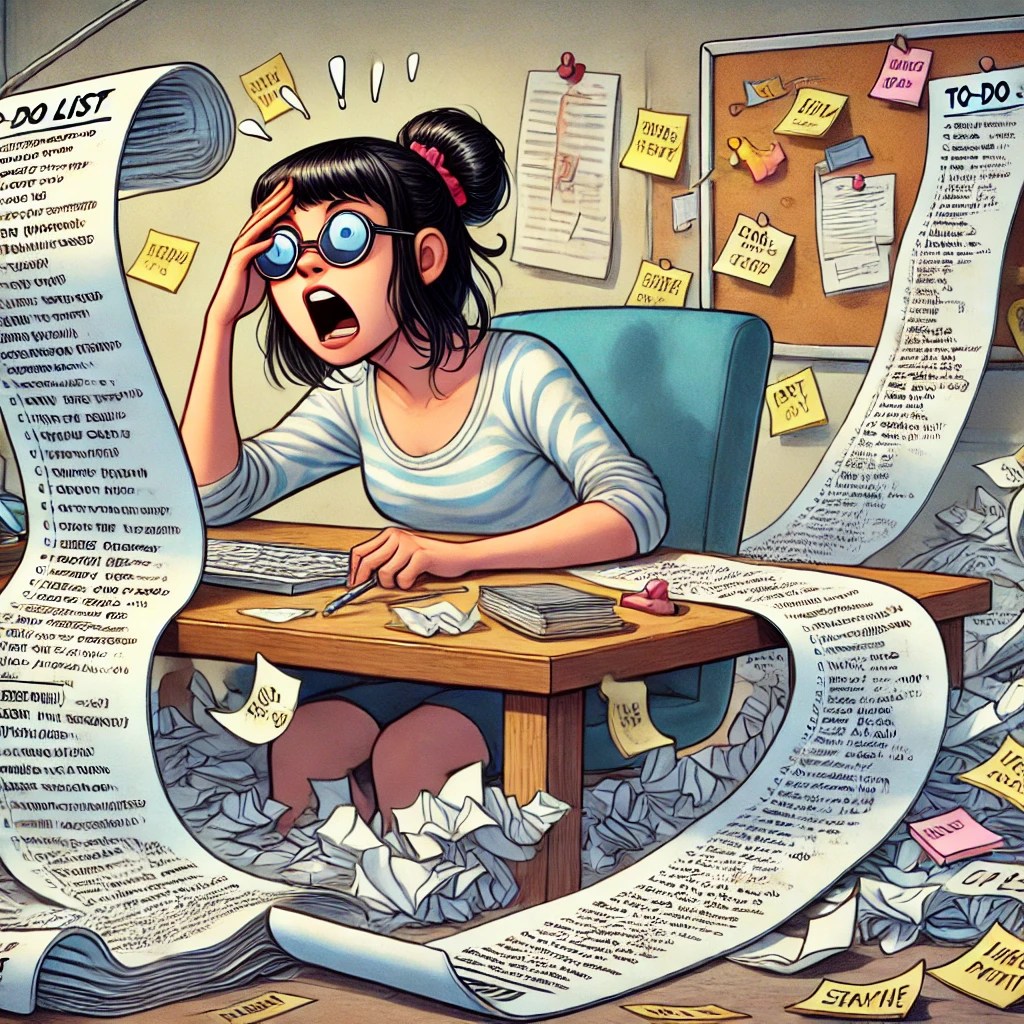
The to-do list: a staple of productivity advice, a seemingly indispensable tool for getting things done, and, for many of us, a source of daily stress. We dutifully jot down our tasks, feeling accomplished as we create our list of things to do. But by the end of the day, when only a few items are checked off and the rest are carried over to tomorrow, that sense of accomplishment can quickly turn into frustration. What if I told you that your to-do list might actually be holding you back? In this blog post, we’ll explore why it might be time to kill your to-do list and how ditching it can actually make you more productive. Plus, I’ll share a witty personal anecdote that might just convince you to try a new approach.
The Tale of the Never-Ending List
A few months ago, I found myself in the throes of a particularly busy week. My to-do list had grown to epic proportions, with tasks spilling over from one day to the next. Each morning, I would dutifully add more items to the list, hoping that today would be the day I finally conquered it. But no matter how hard I worked, the list never seemed to get any shorter. Instead, it felt like I was playing a never-ending game of whack-a-mole, with new tasks popping up faster than I could complete the old ones.
One day, I sat down at my desk, looked at my bloated to-do list, and felt completely overwhelmed. There were so many tasks that I didn’t even know where to start. I was paralyzed by the sheer volume of things I needed to do. So, in a moment of frustration (and perhaps a little rebellion), I did something radical—I crumpled up the list and tossed it in the trash.
At first, I felt a pang of guilt. How was I going to get anything done without my trusty list? But as the day went on, something interesting happened. Without the list to dictate my every move, I started focusing on the tasks that were truly important. I tackled the big, high-impact projects that had been lurking at the bottom of my list for weeks. And you know what? I felt more productive and less stressed than I had in a long time.
That day, I learned that sometimes, the best way to get things done is to kill your to-do list.
Why Your To-Do List Might Be Holding You Back
The idea of killing your to-do list might seem counterintuitive—after all, aren’t lists supposed to help us stay organized and productive? But here’s the thing: to-do lists can sometimes do more harm than good. Here’s why:
1. They Create a False Sense of Productivity: To-do lists can give us the illusion of productivity. We feel accomplished when we check off tasks, even if those tasks are small and insignificant. But checking off low-priority items can distract us from the bigger, more important tasks that really move the needle.
2. They Lead to Overwhelm: When your to-do list is packed with tasks, it can be overwhelming to figure out where to start. This sense of overwhelm can lead to procrastination, as we avoid tackling the list altogether.
3. They Encourage Task Switching: To-do lists often encourage us to jump from task to task, which can lead to task switching—a productivity killer. Constantly switching between tasks makes it harder to focus and complete any one task efficiently.
4. They Don’t Reflect True Priorities: A to-do list often becomes a catch-all for every little thing we need to do, but it doesn’t always reflect our true priorities. Important, long-term projects can get buried under a mountain of minor tasks, leading us to focus on the urgent instead of the important.
How to Be More Productive Without a To-Do List
If you’re ready to ditch your to-do list, you might be wondering how you’ll manage your tasks and stay on top of everything. The good news is, there are plenty of alternative strategies that can help you be more productive without relying on a list. Here are a few to consider:
1. Focus on One Big Thing Each Day
Instead of trying to juggle multiple tasks at once, focus on one big, high-impact task each day. This could be a project that’s been sitting on the back burner, a challenging piece of work that requires deep focus, or a task that will move you closer to your long-term goals. By dedicating your time and energy to one big thing, you’ll make meaningful progress and avoid the overwhelm of a long to-do list.
2. Use Time Blocking
Time blocking is a technique where you schedule specific blocks of time for different tasks or activities. Instead of working from a list, you allocate time in your calendar for your most important tasks. This helps you stay focused and ensures that you’re dedicating time to your priorities.
For example, you might block out two hours in the morning for a deep work session, followed by an hour for meetings, and then another block for emails and administrative tasks. Time blocking helps you stay organized and ensures that your most important work gets done.
3. Practice the Two-Minute Rule
The two-minute rule is a simple but effective strategy for dealing with small tasks. The rule is this: if a task can be done in two minutes or less, do it immediately. This helps prevent small tasks from piling up and cluttering your mind.
By handling quick tasks as they arise, you free up mental space to focus on the bigger, more important work. Plus, it’s a great way to maintain momentum and keep things moving throughout the day.
4. Set Daily Intentions
Instead of creating a to-do list, try setting daily intentions. Each morning, take a few minutes to reflect on what you want to accomplish that day. Choose one or two key priorities and set an intention to focus on those. This approach is less rigid than a to-do list and allows you to be more flexible and adaptive throughout the day.
Daily intentions help you stay aligned with your goals and ensure that you’re focusing on what truly matters. Plus, they encourage a more mindful and intentional approach to your work.
5. Embrace the Power of Saying No
One of the reasons our to-do lists become so overwhelming is that we say yes to too many things. Learning to say no is a powerful way to protect your time and energy. When you’re clear on your priorities, it becomes easier to say no to tasks and commitments that don’t align with them.
By saying no to non-essential tasks, you can focus on what’s truly important and avoid the stress of an overflowing to-do list.
Conclusion
Killing your to-do list might seem like a radical idea, but it can be a game-changer for your productivity and well-being. By focusing on what truly matters, using techniques like time blocking, and setting daily intentions, you can accomplish more without the overwhelm of a never-ending list.
As I learned from my experiment with ditching my to-do list, sometimes the most productive thing you can do is to let go of the list and trust yourself to focus on what’s important. So the next time you’re feeling overwhelmed by your to-do list, consider crumpling it up and throwing it away. You might be surprised at how much more productive—and happier—you feel.
Call to Action: Have you ever tried ditching your to-do list? How do you stay productive without a list? Share your experiences and tips in the comments below or on social media.



 Minimal Power