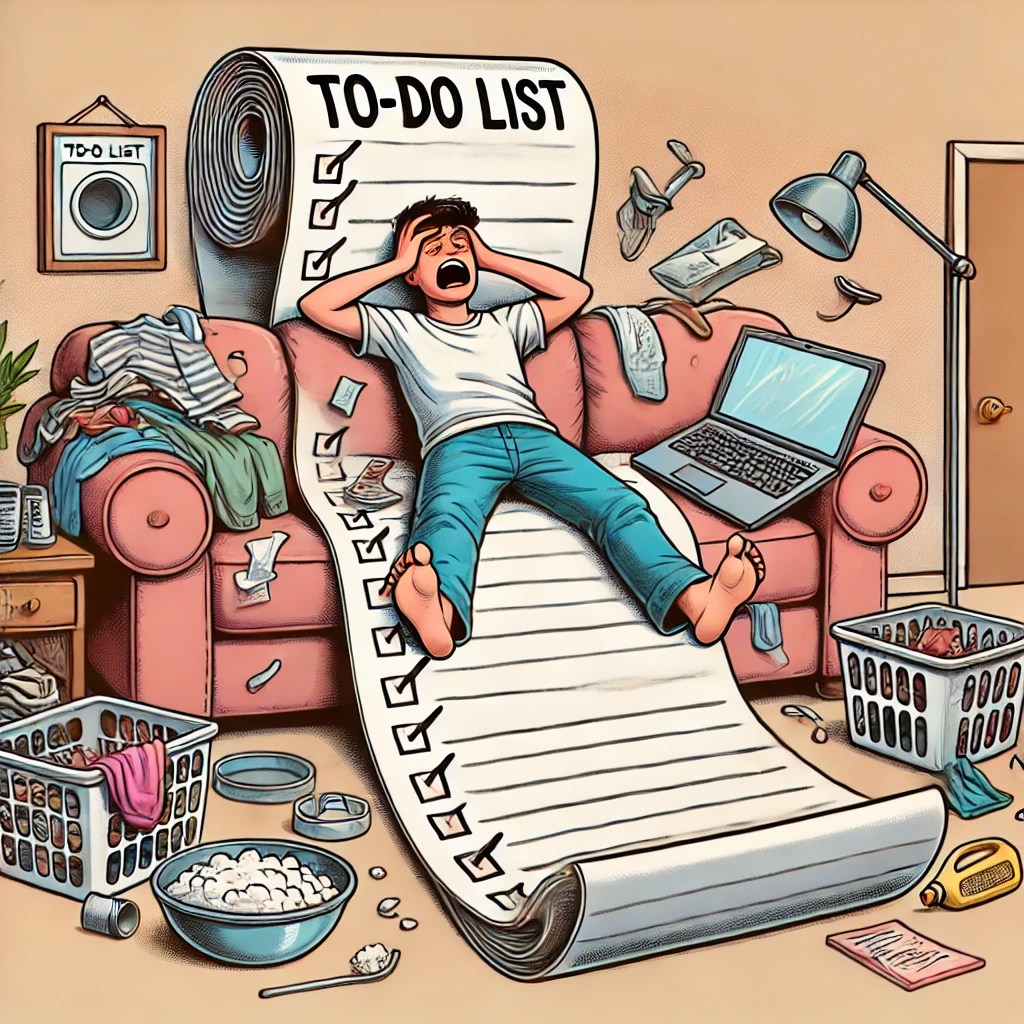
We’ve all been there—staring at a never-ending to-do list, wondering how on earth we’re going to get everything done. The truth is, you don’t have to do everything on your to-do list. In fact, trying to tackle every single task can lead to burnout, stress, and a sense of perpetual overwhelm. Instead, learning to prioritize and focus on what truly matters can help you achieve more with less effort. In this blog post, I’ll share strategies for managing your to-do list more effectively, along with a witty personal anecdote that highlights the importance of not doing it all.
The Day of the Overzealous To-Do List
A few months ago, I had what I thought was a brilliant idea: I would write down every single task I needed to complete in one day. From work projects and errands to household chores and personal goals, I meticulously listed everything out on a massive piece of paper. By the time I was finished, my to-do list looked more like a small novel than a daily planner.
Fueled by coffee and misguided optimism, I dove headfirst into my list, determined to conquer it all. The first few hours were productive, but as the day wore on, I began to realize the enormity of my task. By mid-afternoon, I was exhausted, and by evening, I was downright frazzled. The worst part? I had barely made a dent in my list.
As I collapsed onto the couch, my half-finished tasks mocking me from the list, I had a revelation: trying to do everything was not only impossible but also counterproductive. I was spreading myself too thin, and in the process, I wasn’t giving my full attention to anything. It was time to rethink my approach to to-do lists.
Strategies for Not Doing Everything on Your To-Do List
1. Prioritize Ruthlessly: Not all tasks are created equal. Identify the most important and impactful tasks on your list and focus on those first. Use the 80/20 rule (Pareto Principle), which suggests that 20% of your tasks will yield 80% of your results.
2. Delegate or Delete: Take a hard look at your list and identify tasks that can be delegated to others or deleted altogether. If a task isn’t essential or doesn’t align with your goals, it’s okay to let it go.
3. Break Down Large Tasks: If you have big, overwhelming tasks on your list, break them down into smaller, more manageable steps. This makes it easier to make progress without feeling overwhelmed.
4. Use Time Blocking: Allocate specific time blocks in your day for different tasks. This helps you focus on one task at a time and prevents multitasking, which can reduce productivity.
5. Embrace Imperfection: Understand that it’s okay if not everything gets done. Perfectionism can lead to unnecessary stress and prevent you from moving forward. Aim for progress, not perfection.
6. Review and Reflect: At the end of each day, review your to-do list and reflect on what you accomplished. Celebrate your wins and learn from any setbacks. Use this reflection to plan the next day more effectively.
7. Be Kind to Yourself: Remember that you’re only human, and it’s okay to have days when not everything gets done. Treat yourself with kindness and focus on what you’ve achieved rather than what you haven’t.
8. Focus on High-Impact Tasks: Prioritize tasks that have the most significant impact on your goals. These are the tasks that will move the needle and bring you closer to achieving your objectives.
Conclusion
Not doing everything on your to-do list isn’t a sign of failure; it’s a smart strategy for managing your time and energy more effectively. By prioritizing ruthlessly, delegating or deleting tasks, and focusing on what truly matters, you can accomplish more without feeling overwhelmed. As my day with the overzealous to-do list taught me, it’s not about doing it all—it’s about doing what counts.
Call to Action: How do you manage your to-do list and prioritize your tasks? Share your tips and strategies in the comments below or on social media.



 Minimal Power