
In our quest for peak productivity, many of us fall into the trap of creating overly complex systems for managing tasks. These systems, meant to streamline our lives, often end up doing the exact opposite. Today, I’ll share the comedic mishaps that led me to rethink my approach to task management, along with tips on how to keep things simple and effective.
The Great Task System Meltdown
My journey into the absurd began on a typical Monday morning when I decided that my current productivity system wasn’t cutting it. Inspired by a mix of productivity gurus, I concocted a hybrid beast: part digital, part paper-based, part voice-activated, and entirely confusing.
The system involved multiple apps, a color-coded filing system, daily, weekly, and monthly planners, and even a set of dice to prioritize tasks based on the roll (I wish I were joking). To add to the complexity, I integrated a voice assistant to remind me of tasks—but it only worked when it decided to recognize my accent.
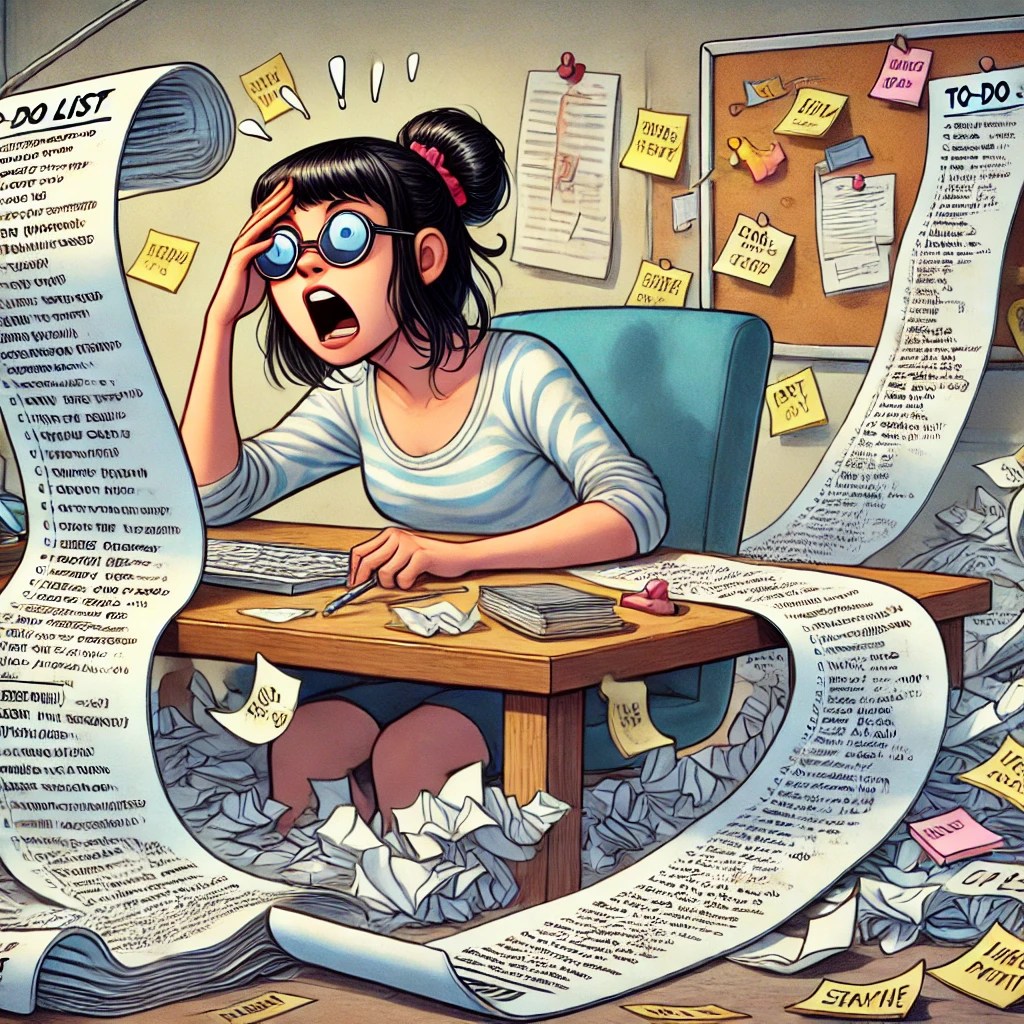
The meltdown occurred during a crucial week of deadlines. I found myself flipping through three different notebooks, checking two apps, and shouting at my voice assistant, which seemed more interested in playing jazz tunes than reminding me of my schedule. At one point, I was knee-deep in sticky notes, contemplating if I could build a raft to escape my sea of tasks. It was then I realized that my system didn’t just need a reboot—it needed a retirement.
Why Keep Task Management Simple?
Efficiency: The simpler your system, the less time you spend managing the system itself and the more time you spend actually doing the tasks.
Reducibility: Overcomplicated systems are prone to breakdowns. A simple system is easier to maintain and less likely to fail when you most need it to work.
Focus: With fewer distractions and complications, your mental energy is directed towards what’s truly important, not just maintaining a behemoth of a system.
Tips for Simplifying Your Task Management
Consolidate Your Tools: Choose one digital tool or physical planner that suits most of your needs. The fewer places you have to check, the better.
Limit Task Categories: Instead of a dozen categories, try narrowing it down to three to five. For instance, Personal, Work, Urgent, and Long-Term.
Use the Two-Minute Rule: If something can be done in two minutes or less, do it immediately. This keeps small tasks from piling up or cluttering your system.
Schedule Regular Reviews: Instead of constant monitoring, set specific times to review your task list. This helps keep your daily workflow uninterrupted.
Conclusion
Through my own comical trial and error, I learned that the best task management system is one that reduces friction and complexity, not adds to it. By embracing simplicity, you can turn your productivity system from a source of stress into a tool that genuinely enhances your effectiveness.
Call to Action: Have you ever overcomplicated your productivity system? Share your stories and tips for keeping things simple in the comments below.



 Minimal Power